Enterprise AI Governance in 2026: A Practical Checklist for Leaders
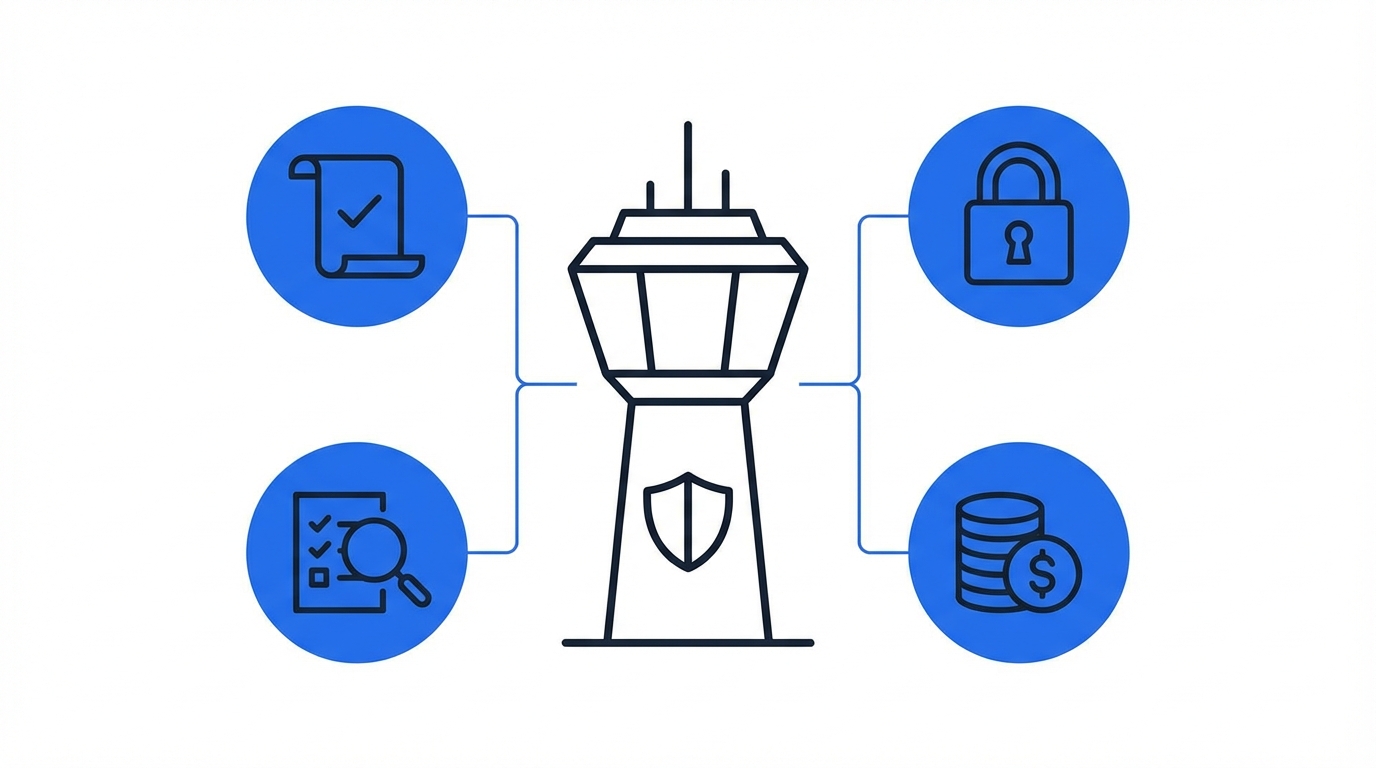 Enterprise LLM adoption is accelerating—but governance often lags behind. In 2026, leaders need a governance model that does two things at once: keep risk under control and keep teams moving fast.
This guide is a practical checklist you can use to stand up an “AI governance baseline” in weeks—not quarters.
What AI governance should achieve (in plain terms)
A strong baseline answers these questions:
- What data can be used with LLMs—and what is prohibited?
- Who can access which tools, models, and knowledge sources?
- What gets logged (and who reviews it)?
- How do we measure value and control cost?
- Who owns decisions, exceptions, and incident response?
The 2026 governance checklist
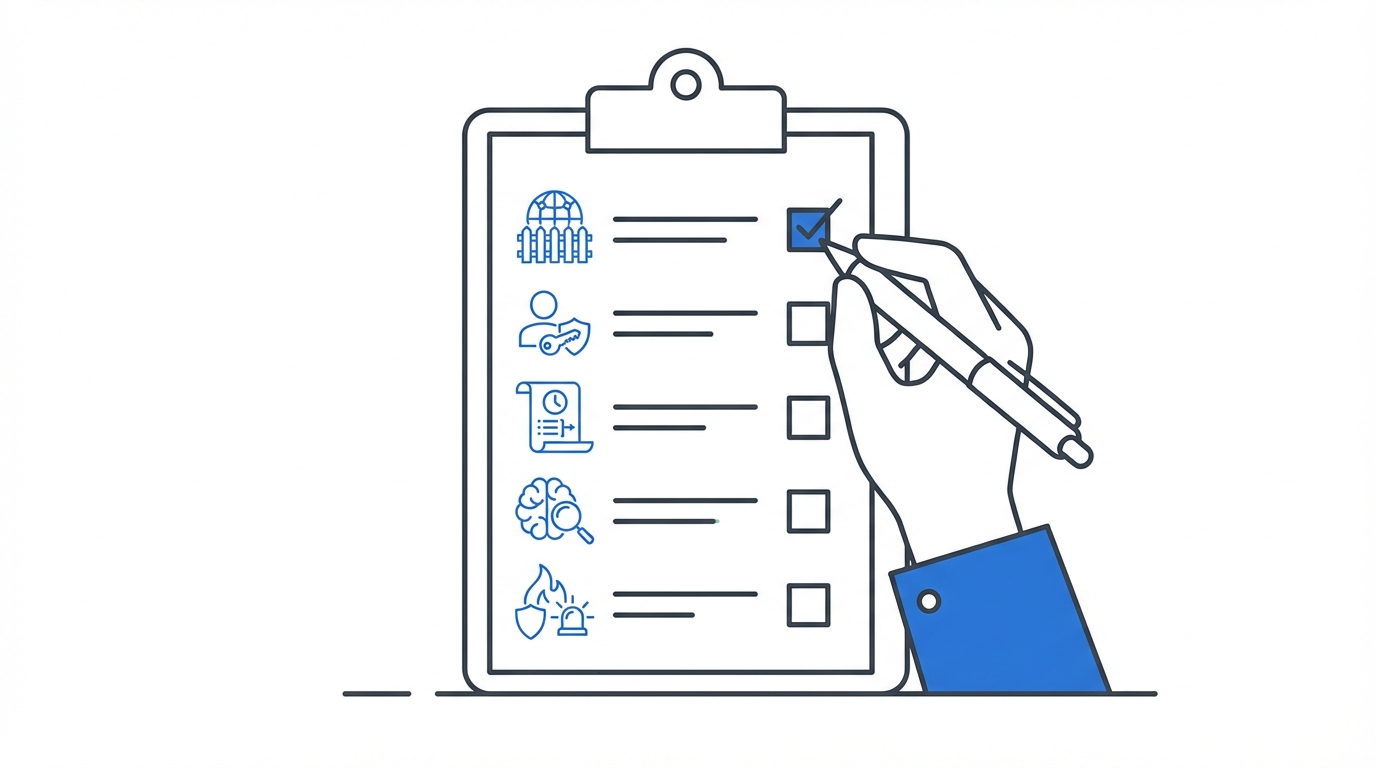
1) Data boundary and classification
- Define prohibited data categories (e.g., regulated PII, unreleased financials, legal privileged content).
- Define “allowed with controls” categories (e.g., internal policies, sanitized customer tickets).
- Establish a simple classification scheme employees can actually follow.
- Document where the “system of truth” lives for critical knowledge.
2) Tooling and model policy (approved path)
- Publish an approved list of AI tools (and the business reasons for each).
- Define which workflows must use approved tools (e.g., anything customer-facing).
- Set rules for personal accounts vs enterprise accounts.
- Decide when to use smaller/cheaper models vs premium models (routing guidance).
3) Identity, access, and permissions
- Require SSO where possible for enterprise tools.
- Enforce role-based access (RBAC) for sensitive knowledge sources.
- Ensure access respects existing permissions (no “AI bypass” of ACLs).
- Define offboarding procedures (revoking access, keys, connectors).
4) Auditability and logging
- Confirm you can answer: who used which model, with what inputs, and what outputs were produced?
- Decide retention duration for logs.
- Define review cadence (weekly for early rollout, then monthly).
- Establish escalation rules for suspicious prompts or data leakage.
5) Human-in-the-loop design
- Identify workflows that require approval before sending externally.
- Define who is accountable for final output quality (role/owner).
- Provide templates for common tasks (emails, proposals, summaries).
- Require citations or source links for knowledge-based outputs when possible.
6) Quality and evaluation (Evals)
- Define “quality” per workflow (accuracy, completeness, tone, compliance).
- Build a small evaluation set (10–30 examples) for repeatable testing.
- Add regression checks when prompts/tools change.
- Monitor drift over time (new policies, new products, new data).
7) Cost controls (predictability over minimization)
- Track usage by team/workflow.
- Set budgets with alerts and soft limits.
- Use caching/reuse patterns for repeated queries where appropriate.
- Review ROI quarterly: which workflows deliver measurable impact?
8) Security and legal operating cadence
- Name a cross-functional owner group (security, legal, IT, business).
- Create an intake form for new use cases (lightweight, fast).
- Maintain vendor risk documentation (data handling, retention, training usage).
- Define incident response runbooks (who does what, when).
A simple operating model that works
If you want a minimal structure:
- Central team sets guardrails, templates, logging, and approved tooling.
- Business teams own use cases, adoption, and outcome metrics.
- A short weekly review handles exceptions and escalations.
Closing thought
In 2026, AI governance is not about saying “no.” It’s about building a safe default—and a fast path to value.
Next: I’ll share a simple scorecard for evaluating AI tools for enterprise adoption (security, UX, integrations, cost, and ROI).